
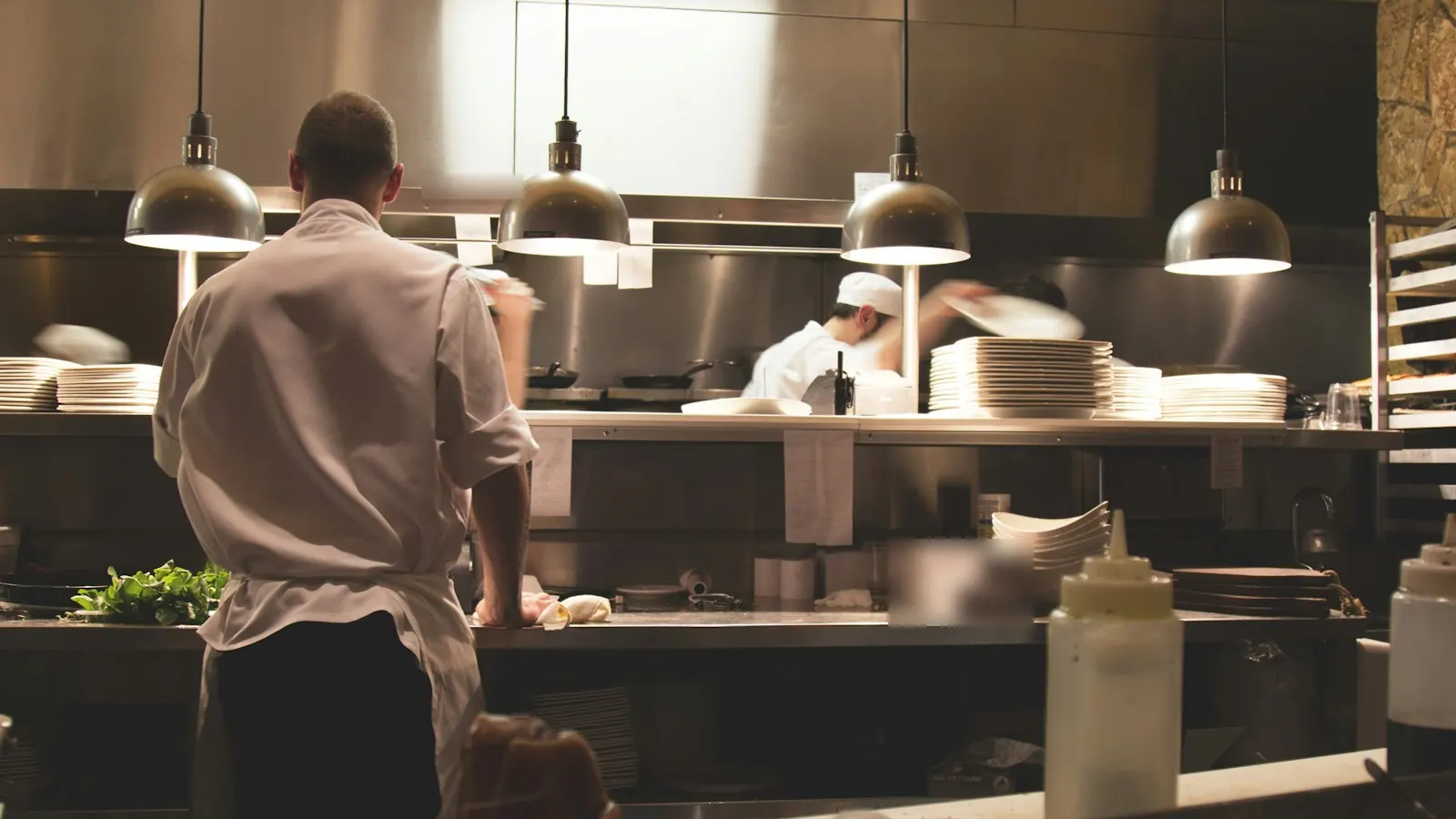
Someone new starts on Friday. Your best server stops serving to show them around, explains things from memory, and forgets half of it in the rush. Two months later that person leaves, and the whole cycle starts again.
The hidden cost of training from zero
Every time someone joins, an experienced person stops working to teach. They teach from memory, so they teach it slightly differently each time. The new hire learns in the middle of service, makes mistakes, and quality wobbles.
Hospitality has high staff turnover in many places, so this is not a one-off. It repeats with every hire and every departure. Each round is small, but together they add up to a large and invisible cost.
The core idea: document once
Most of what happens in a restaurant repeats. How you greet a table. How a dish is plated. How the till is closed. How an online order is checked and sent to the kitchen.
Anything that repeats can be documented once and reused every time. Once it is written or recorded, it stops depending on who happens to be training that day, and everyone learns the same standard.
Video training: the smart shortcut
Instead of repeating the same explanation in person, record it. You do not need a film crew; a phone and a quiet moment are enough.
- Ask your most reliable person to do the task normally, while you film.
- Keep each video short and about one task only.
- Add a one-page checklist with the key steps and the common mistakes.
- Store the videos somewhere the team can open them on their phones.
The benefits are simple:
- Consistency: everyone learns the same way, from the best example.
- Scale: one video can train one person or fifty, with no extra effort.
- Your best people keep working: they stop pausing service to teach.
- New staff can revise: they can rewatch a task as often as they need, without feeling awkward.
You can also add a few quick questions at the end, so you know the person understood before they go on the floor.
A worked example
Say closing the till and the end-of-day checks take a new manager three or four shadow shifts to learn, with you or a senior colleague standing next to them each time.
You record one ten-minute video of the close, plus a short checklist. The next new manager watches it twice, does one shadow shift with the checklist in hand, and asks questions only about the unusual cases.
Fewer of your hours go into repeating yourself, and the close is done the same way whoever is on shift. The figures are hypothetical; the saving shows up every time someone new starts.
Training never really ends
Onboarding is only the beginning. Good teams review and improve all the time: a quick refresher when a dish changes, a short chat when a mistake repeats, a check on standards every few months.
People who understand why a task matters, and see that the business takes training seriously, tend to care more about getting it right.
Why this is the base for growth
You cannot open a second location if every employee depends on you to learn. With documented processes and a small library of videos, your way of working can be repeated with a different team in a different place, without you being there every shift.
The common mistake
Keeping it all in your head. While knowledge lives only with you and a few long-standing staff, the business is fragile: one departure and a piece of quality walks out of the door. Writing it down turns personal know-how into an asset of the restaurant.
Where your tools help
The fewer manual steps a job has, the less there is to teach. When online orders, payments and customer messages work the same way every time, training a new person on them is quicker. With GetFoodies, orders from your own site arrive in one dashboard and on the kitchen display, the same way on every shift.
Start with one task
Pick the task you explain most often to new people. Write it down or film it this week. Next time someone joins, use that instead of starting from zero.
When you are ready for an ordering setup that is simple to teach, you can create your free site and try it with your team.