
Open a map of your area and count the places that sell roughly what you sell. To a hungry customer scrolling on their phone, many of them look the same. And when restaurants look the same, the only thing left to compare is price.
The way out is to be clearly different in a way your customers care about. One of the simplest tools for finding that difference is the SWOT analysis: an hour, a sheet of paper and some honesty.
What SWOT means
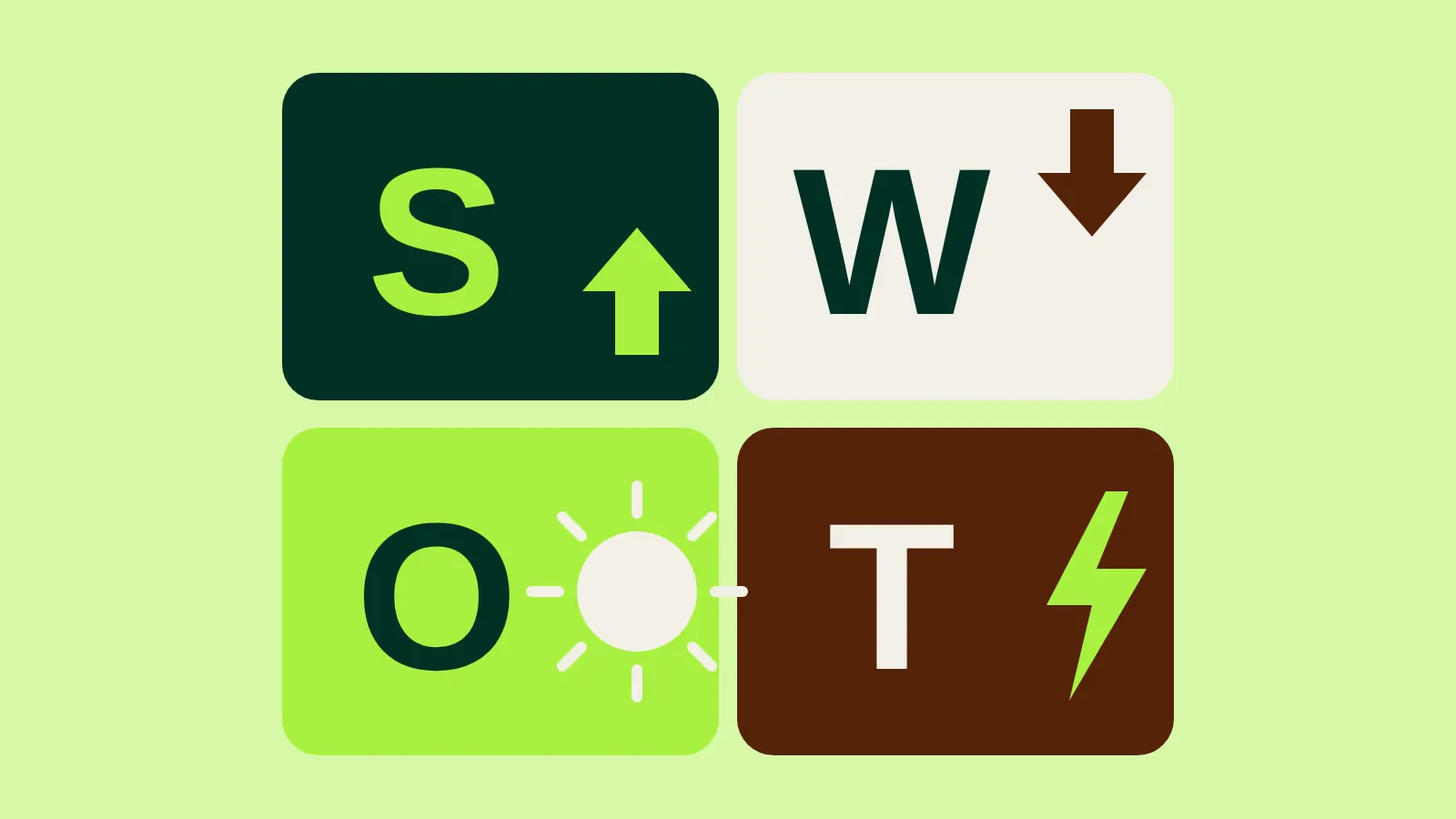
SWOT stands for four boxes. Two look inside your restaurant, two look outside it.
- Strengths: what you do well and what customers praise.
- Weaknesses: where you fall short or keep getting the same complaint.
- Opportunities: what people in your area want and nobody is doing well.
- Threats: what could hurt you, such as a new competitor, rising costs or changing habits.
The boxes are easy. The hard part is filling them honestly, with evidence rather than pride.
Where to find the evidence
- Your reviews. Read the last few months. Which words come up again and again, good and bad?
- Competitors' reviews. What do their customers complain about? Slow delivery, cold food, rude staff, the same menu everywhere?
- Your sales. Which dishes sell, which days are strong, which customers come back?
- Your team. Staff hear what customers say at the table and on the phone. Ask them.
A worked example
Say you run a small pizzeria in a neighbourhood with four other pizza places. After an evening with your reviews and theirs, your SWOT might look like this:
- Strengths: long-fermented dough that regulars mention by name; a friendly, fast counter team.
- Weaknesses: a long menu that slows the kitchen on Fridays; few photos online.
- Opportunities: competitors' reviews often mention soggy pizza on delivery; several families nearby ask about gluten-free options.
- Threats: flour and cheese costs keep climbing; a new chain opening down the road.
The magic is in the crossing
A SWOT becomes useful when you connect the boxes:
- Strength plus opportunity: this is where your difference usually lives. In the example, the dough is a real strength and "good pizza that travels well" is a gap. Investing in packaging and a shorter delivery radius could make "the pizza that arrives crisp" your story.
- Weakness blocking an opportunity: fix it first. The long menu slows Fridays, so trimming it frees the kitchen to do fewer things very well.
- Strength against a threat: a chain competes on price; you compete on dough, people and the relationship with regulars.
Not every opportunity is yours. Only chase the ones you can serve better than anyone nearby. A gluten-free base you cannot make well is not a difference; it is a risk.
Why difference beats discounts
When you are the same as everyone else, customers compare you on price, and a price war is a race nobody wins on thin restaurant margins. When you are clearly different, there is nothing identical to compare you with. You compete on value, and value is what lets you charge a fair price.
Make the difference visible
A difference nobody notices does not count. Once you have it, show it everywhere:
- In a short line under your name.
- At the top of your menu, with good photos.
- In your posts and your Google profile.
- In how your team describes the restaurant when someone asks.
Do it this week
- Draw four boxes on a sheet of paper.
- Spend 30 minutes reading your reviews and those of two or three competitors.
- Fill each box with three points, each backed by something you can point to.
- Circle the one strength-plus-opportunity pair you could act on this month.
- Review the sheet every few months; markets move.
Where GetFoodies fits
Your own ordering site, dish reviews and the customer data in your dashboard give you real material for the strengths box, and a branded channel where your difference is the first thing customers see. If that sounds useful, you can create your free site and see how it looks.