
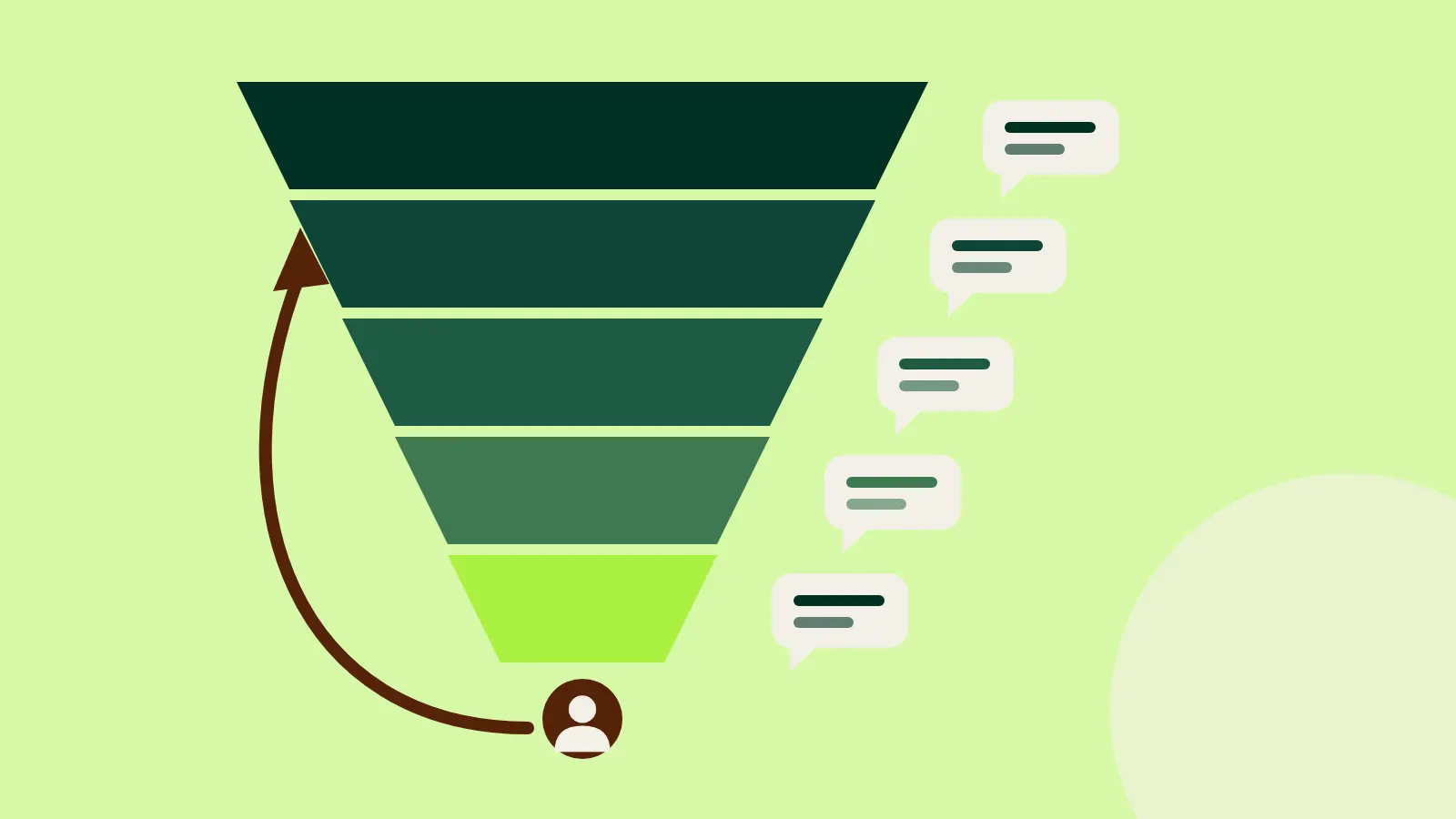
You know you should thank first-time customers, nudge regulars who've gone quiet and ask happy guests for a review. But between suppliers, staff and Saturday night, it doesn't happen. Not because you don't care, but because nobody can remember hundreds of customers at once.
A relationship funnel is a simple way out. You decide once what each type of customer should hear, and when. Then you follow the plan instead of relying on memory.
What a relationship funnel is
Picture the journey of a typical customer. They discover you, order for the first time, maybe come back, become a regular, and one day start to drift away. At each of those points, a different message makes sense.
A relationship funnel is just that map: stage, trigger, message. "When someone orders for the first time, thank them and tell them about cashback." Written down once, it works the same for ten customers or a thousand.
The five stages and what to say
1. First order
This is the customer deciding if you're worth a second try. Say thank you, confirm the order went well and explain the reason to come back, like the cashback they've just earned.
2. Second order
The step from one order to two is often the hardest. Cashback that expires in a few days gives them a gentle reason to return soon, before the habit fades.
3. Regular
Regulars don't need persuading; they need to feel recognised. A thank-you, early news about a new dish or a small treat on a special day goes a long way.
4. Going quiet
Someone who used to order every fortnight hasn't ordered in six weeks. A friendly "we miss you" with a reason to come back can bring them home before they're gone for good.
5. After every order
A request to review the dishes and the restaurant on Google, while the meal is still fresh in their mind. It helps your reputation and helps new customers find you.
Why several touches beat one
One message rarely changes a habit. People are busy, emails get buried, and the first nudge often isn't the one that works. A funnel builds in patience: a thank-you, then a reminder, then an offer, spaced out and never pushy.
The key is respect. Fewer, useful messages beat a constant stream. If a message wouldn't interest you as a customer, don't send it.
A worked example
Say you have 600 customers on your own channel. You look at their orders and see:
- 150 ordered once, over a month ago.
- 300 order now and then.
- 150 order most weeks.
That's three different conversations. The 150 one-timers get a short email reminding them of the dish they tried and the cashback waiting for them. The weekly regulars get early news about the new menu. The middle group gets your normal monthly email. Same effort as one generic blast, far more relevant to each person.
What a funnel needs: data and your own channel
You can't send the right message at the right stage if you don't know who ordered, what and when. Orders that live only inside someone else's app don't give you that. Customers who order on your own channel do, and they can opt in to hear from you.
Start small
You don't need the whole funnel on day one. Pick one stage, probably the customers who've gone quiet, write the message and send it. When it's working, add the next.
GetFoodies gives you the pieces: the data of every customer who orders on your own site, cashback with an expiry, email marketing, push notifications from your installable site and Google review requests after each order. GetChef suggests promotions ready to send, and you decide what goes out. If you'd like to try it, create your free site.