
You open early, close late and spend the day putting out fires. Yet at the end of the month the results do not match the effort. Many owners feel this, and it is rarely about working harder.
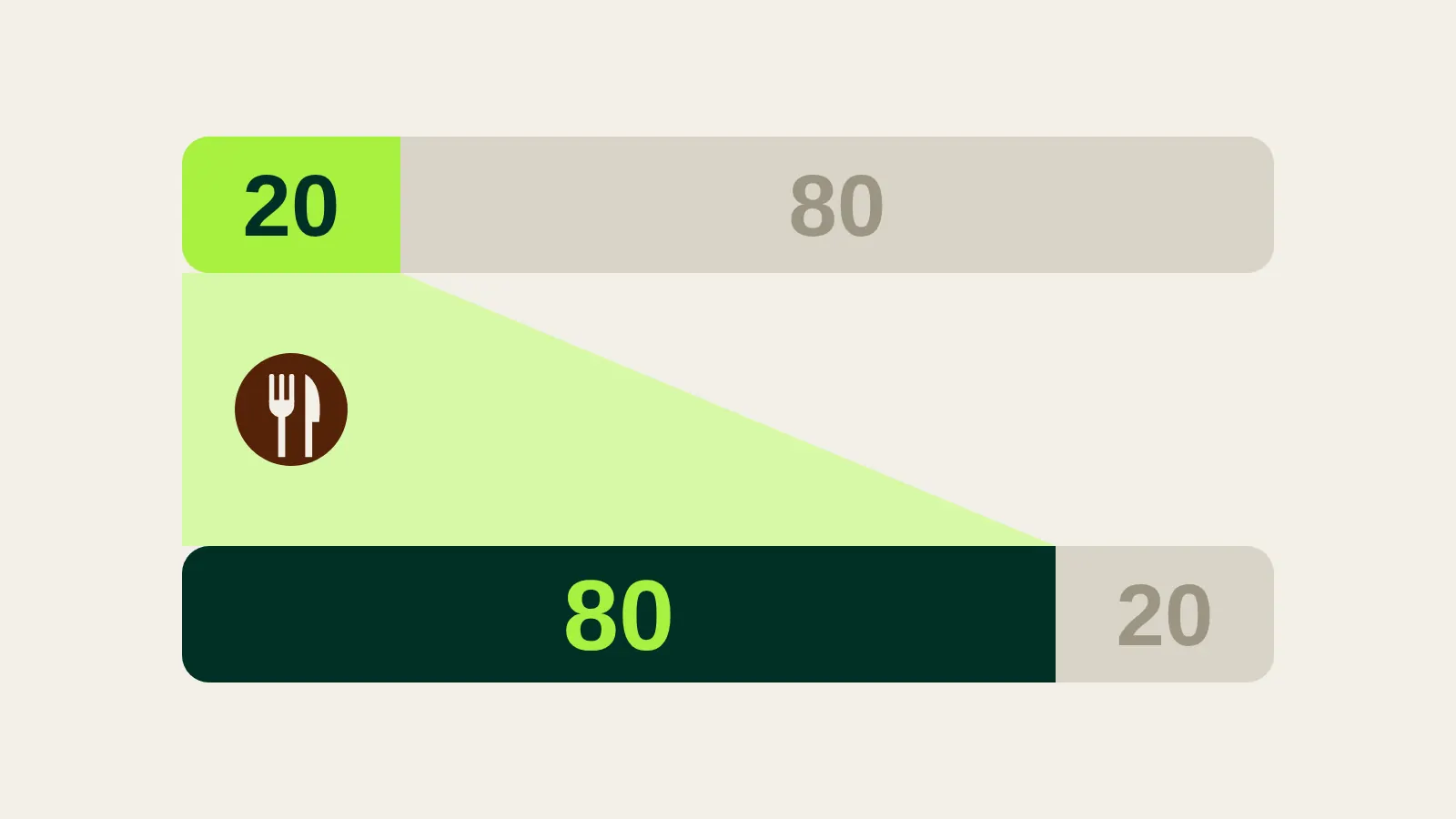
A simple idea can change how you spend your time: the Pareto rule, often called the 80/20 rule. A small share of what you do usually produces most of your results. The skill is finding that small share and protecting it.
What the Pareto rule says
The idea comes from the economist Vilfredo Pareto, who noticed that a small share of people owned most of the land in Italy. Since then people have found the same pattern almost everywhere: a few causes, most of the effect.
The numbers are rarely exactly 80 and 20. It might be 70/30 or 90/10. The point is the imbalance, and it is a useful reminder that treating everything as equally important is a quiet way to waste effort.
Where to look in your restaurant
- Customers. A group of regulars often brings a large share of your revenue. They deserve to be known, thanked and rewarded.
- Dishes. A handful of dishes usually brings most of your profit. Others take prep time and shelf space for little return.
- Marketing. One or two channels often bring most of your good customers. The rest may be habit.
- Problems. A few recurring issues, such as one slow station or one confusing menu item, cause most complaints.
- Your time. A few tasks really move the business: pricing, menu decisions, coaching your team, talking to customers. Many others could be delegated.
A worked example
Say you list your 40 dishes by gross profit for the last month. You find that 8 of them bring in more than half your profit, while the bottom 15 together bring in very little but need a dozen ingredients nobody else uses.
That does not mean you cut all 15 tomorrow. Check first: does one of them bring in groups, like the only vegetarian main? Is one a new dish still finding its audience? Then decide. Highlight the 8 on your menu and in your posts, keep the bottom dishes that play a real role, and retire the rest. You have just simplified purchasing, prep and the menu, with your best sellers more visible.
Apply it to your own time
This is often the most powerful use. Try it for one week:
- Write down, roughly, what you spend your time on each day.
- Mark the tasks that directly improve sales, margin, customers or your team.
- For everything else, ask: can someone else do this, can a tool help, or can it simply stop?
- Block time in your diary for the high-impact tasks, before the day fills up.
Owners who make this shift often describe it as moving from working in the business to working on it.
The common mistake
Giving everything the same attention: the loyal customer and the one-off, the star dish and the dead weight, the critical task and the trivial one. Without priorities, effort spreads thin. Pareto forces you to choose.
Where GetFoodies fits
You cannot focus on your vital few if you cannot see them. On your own channel, the dashboard shows your customers and how often they order, so your regulars stand out, and cashback gives them a reason to keep coming back. GetChef suggests promotions ready to send, and Get Social prepares your weekly posts for you to approve, which frees time for the tasks only you can do. You can create your free site and see your own numbers.
Do the exercise
Write down your ten best customers, your five most profitable dishes and the three tasks that move your business most. Then ask honestly: are they getting the attention they deserve?